

What Is a Fractional CMO? The Complete Guide

Share:
Share:

A fractional CMO is a part-time chief marketing officer. You buy a slice of a senior marketing executive’s time, and in return they own your marketing strategy, manage the people and agencies doing the work, and answer for a revenue number. You get executive judgment without a full-time executive salary, and you can end it if it stops paying for itself.
Some people think the term is silly. It is a little. “Part-time CMO” says the same thing. The name matters less than this: the title has no license and no barrier to entry, so anyone can claim it. Some fractional CMOs have run nine-figure ad budgets. Others are coaches who have never signed off on a media buy. This guide will help you tell them apart.
Key takeaways
- A fractional CMO owns strategy and a revenue KPI. An agency owns execution and reports on its own work.
- Most are paid a monthly retainer. Judge the price by how many extra customers it takes to cover it.
- The first 90 days should go to tracking, account ownership and messaging, not to a bigger ad budget.
- It’s the wrong hire if you don’t have product-market fit, don’t have budget to act, or only need one task done.
In this guide
What a fractional CMO actually does
I’ve done some version of this job for 25+ years: more than $1.5B in ad placements since 1999, 100,000+ campaigns, and over 300 marketing plans. The details change by company. Four parts of the job don’t.
Sets a revenue target and works backward to leads
Marketing is tied to revenue or it’s tied to nothing. Try this the next time you sign the monthly marketing check: notice what number your mind goes to. If it’s revenue or qualified leads, you’ll keep signing. If it’s “5 million impressions,” you’ll cancel eventually, however good the work was.
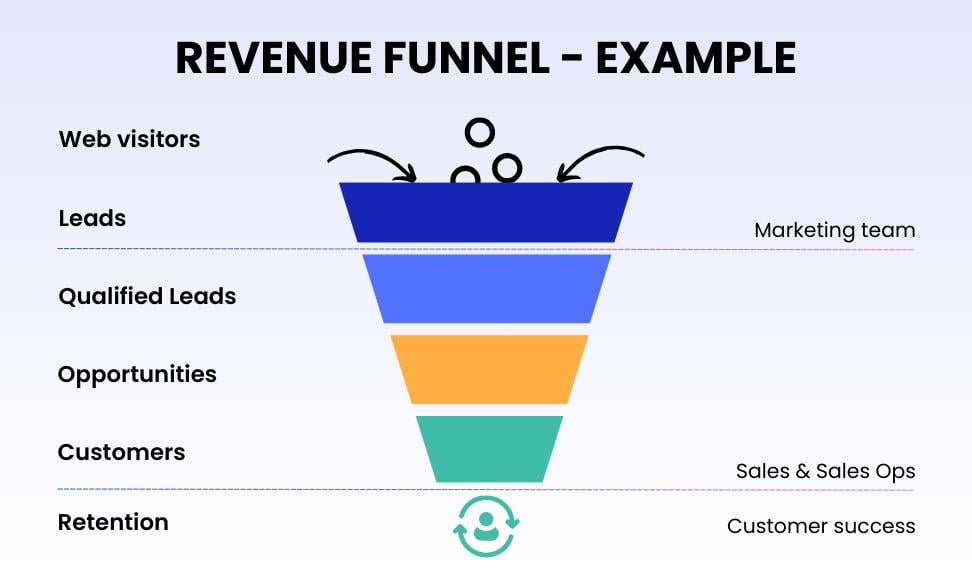
So the job starts with your revenue goal. From there you work out how many new customers that takes, then how many qualified leads, then how many raw leads. Roughly a third of people make it through each stage of a funnel, which is why the lead number comes out bigger than most owners expect. Once you see it, the budget conversation gets a lot more honest.
Runs your agencies and your team
Agencies do the work. Somebody has to decide what work they do and whether it’s paying off. In most small and mid-sized companies, that somebody is the owner, squeezing it in between everything else and without the background to judge it. A fractional CMO takes that seat. They read the agency’s reports, ask why cost per lead went up, and pull budget from whatever isn’t producing. More on that in how a fractional CMO gets more out of any ad agency.
Reads the numbers closely
Two things I run into constantly. The first is an ad account reporting 0.44 conversions. You can’t get 44% of a customer. A decimal means the platform is counting something that isn’t a lead, like page views or time on site, so the “conversion rate” in the agency’s report is fiction.
The second is a channel showing zero conversions that everyone wants to shut off. Zero doesn’t always mean nothing happened. My own Google Ads showed zero attributed conversions for years, and when I turned them off, my total leads went to zero. Those ads were warming up buyers who came back later through other channels. Before you kill a channel, test what happens to total leads without it.
Gets you the keys back
Who owns your Google Analytics? Your ad accounts? Your domain? If the honest answer is “the agency” or “a guy who used to work here,” one bad breakup could cost you years of data. A good fractional CMO moves all of it under one account the business owns, and the owner holds the password from day one.
How a fractional CMO engagement works
The paperwork varies from one fractional CMO to the next. The shape of the work mostly doesn’t.
Hours and access
You buy a set amount of time each month, with a standing weekly meeting and access in between for decisions that can’t wait. The first 90 days take more hours than the months after, because that’s when tracking and accounts get fixed.
Who they work with
Your in-house marketing people, if you have any, and every outside vendor: the ad agency, the web developer, the SEO firm. The CMO doesn’t replace them. The CMO tells them what to do and checks whether they did it.
What they report on
One main KPI that you agree on in writing, tied to revenue. Every meeting should open with “Here’s the main number. Has anything changed?” If the KPI changes, the work changes with it.
How long it lasts
As long as it keeps paying for itself. My clients stay an average of 4.5 years. If someone wants a long contract before they’ve shown you anything, be careful.
How it ends
It should end cleanly. Because your business owns the accounts, a fractional CMO can leave without taking anything with them. Ask about this before you sign, not after.
Fractional CMO vs. full-time, interim, agency and consultant
These roles get mixed up all the time. The real difference is who answers to you for revenue and who only answers for their own deliverables.
| Fractional CMO | Full-time CMO | Interim CMO | Agency | Consultant | |
|---|---|---|---|---|---|
| Owns strategy | Yes | Yes | Yes, temporarily | Rarely | Recommends it |
| Manages vendors | Yes | Yes | Yes | Is the vendor | No |
| Accountable for | Revenue KPI | Revenue KPI | Holding the seat | Its deliverables | The report |
| Time | Part-time, ongoing | Full-time | Full-time, a few months | Per scope | One project |
| Paid by | Monthly retainer | Salary, benefits, equity | Day rate or contract | Retainer plus media fees | Project fee or hourly |
The agency comparison causes the most confusion. An agency grading its own homework is going to pass itself. I’m not knocking agencies here. It’s the incentive. You want at least one person in the room whose only loyalty is to your revenue number. If you’re wondering whether to hire an agency or a fractional CMO, you probably need both: the agency to do the work and the CMO to judge it. What a fractional CMO should be doing for your company goes deeper on the split.
When to hire a fractional CMO
If marketing is working and you can explain why, you probably don’t need one. If a couple of these sound familiar, you probably do:
- Ad spend keeps climbing while leads stay flat.
- Nobody can tell you which channel brings in paying customers, only which one brings in “conversions.”
- You manage two or three agencies yourself and can’t tell whether they’re any good.
- The website gets traffic and the phone stays quiet.
- You lost access to an ad account or analytics when a vendor or employee left.
- You’re about to hire a full-time marketing director and aren’t sure what to hire for.
They all come down to money going out for marketing that nobody can tie to money coming in. More spend won’t fix that. Spend is the weakest lever you have, because it magnifies whatever is already broken. I work in this order: message, then audience, then offer, then the website experience, and budget last. Change one of those at a time, measure it against where you started, keep what works, and move to the next.
How much a fractional CMO costs
Pricing usually takes one of three forms: a monthly retainer for ongoing leadership, a fixed fee for a defined project like a marketing plan, or hourly advisory time. Retainers are the most common, because the job doesn’t end after one deliverable.
JRcmo pricing depends on scope, so there’s no one number to quote here. Ask about it during the 2-hour strategy session, once we know what your business needs.
The sticker price is less useful than this question: how many extra customers does the engagement need to produce to pay for itself? Here’s the math, using made-up numbers so you can swap in your own.
Example only:

Profit from one new customer: $4,000

Monthly retainer: $6,000

Break-even: 6,000 ÷ 4,000 = 1.5, so 2 extra customers a month
If two extra customers a month is realistic for your business, the price works. If nobody at your company knows what one customer is worth in profit, sort that out before you hire anyone, me included.
Then compare it with the full-time route. A full-time CMO comes with a salary, benefits, often equity, a recruiting fee and a long ramp-up. If it doesn’t work out, you start the search over. A fractional engagement lets you learn what the role needs before you commit to a permanent seat.
How to choose the right fractional CMO
Every candidate will tell you they’re strategic and focused on results. Their competitors say the same thing, so it tells you nothing. Ask questions a platitude can’t answer:
- How much ad spend have you personally been responsible for, and on which platforms? You want a real number and channels you can check.
- Our leads dropped last quarter. How would you figure out why? Listen for a process. “I’d look at it and see what feels off” is not a process.
- What’s the one number you’d hold yourself to? If it isn’t tied to revenue or qualified leads, keep looking.
- Who owns our accounts if you leave? The only right answer is that you do.
- Can I talk to a client you’ve worked with for more than a year? Long relationships are hard to fake. You can read JRcmo client reviews to see what that looks like.
Watch the first ten minutes of the first call, too. A strong candidate asks about your CRM, your close rate and which of last quarter’s leads bought. A weak one talks about your logo.
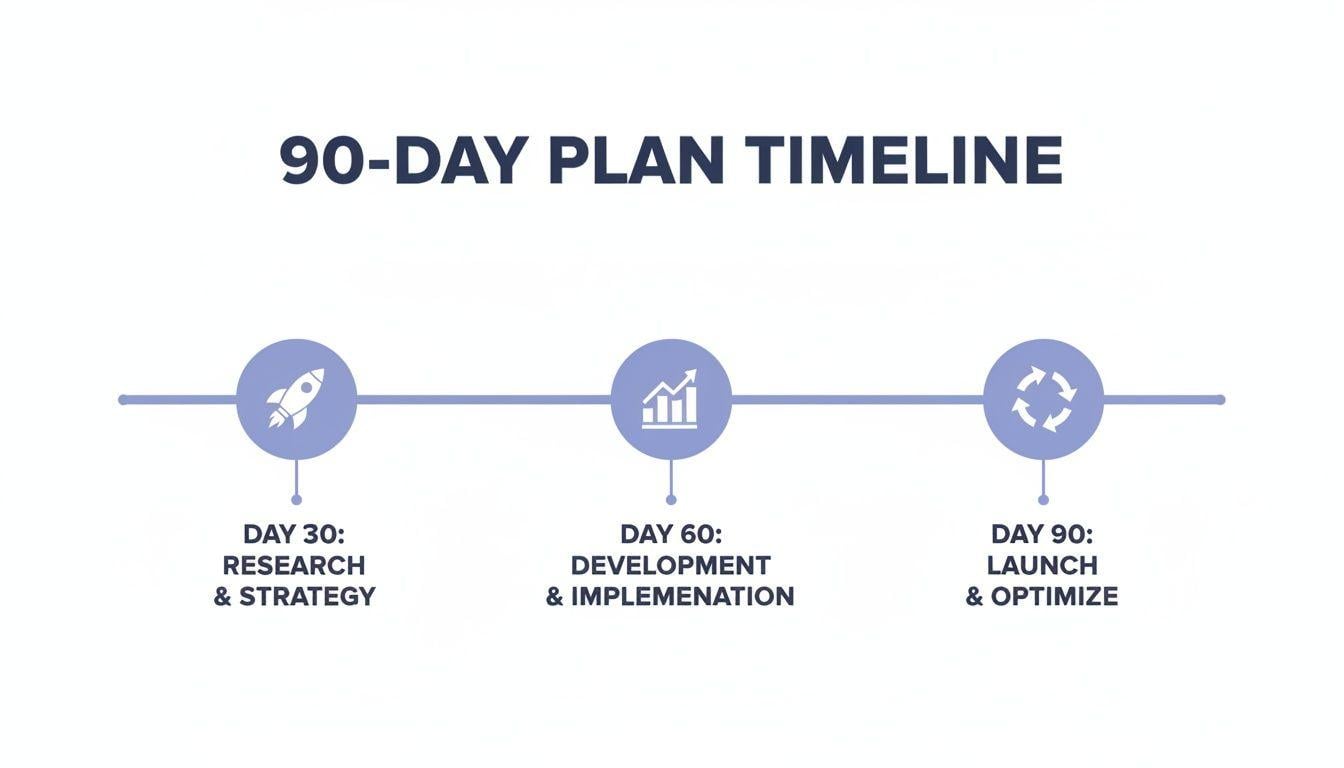
The first 90 days
Every business is different, but the first three months tend to go in the same order, because some fixes have to come before others.
Days 1 to 30: find out what’s true
Audit the tracking, get the business ownership of every account, and agree on the one KPI. You’ll usually find conversions counting things that aren’t leads, plus at least one account nobody can log into.
Days 31 to 60: fix the message before the money
Rewrite the ads and page headlines so they open with what the buyer is trying to avoid, not your company name or how long you’ve been in business. Nobody cares who you are until they care what you can do for them. Then adjust who sees it.
Days 61 to 90: test, read, decide
Change one variable at a time, read the result against the baseline, and only then talk about adding budget. The full approach is on the fractional CMO methodology page.
When a fractional CMO is the wrong call
I'd rather you not hire me than hire me for the wrong job. A fractional CMO is a poor fit when:
- You don't have product-market fit yet. Marketing leadership can't save a product people don't want.
- You don't have money to act on a plan. A strategy nobody can afford to carry out is just an expensive document.
- You need one task done. If the real problem is a website rebuild, hire a good web team.
- You want someone in the office full-time running a large internal team. That's a full-time CMO.
The upside of going fractional is senior judgment at a part-time cost, and you can walk away if it isn't working. The downside is that your CMO has other clients, so you get focused hours rather than someone on call around the clock. Know both going in.
Find your blind spots before you hire anyone
Most of the problems I fix aren't hidden. They're sitting in plain sight: the fractional conversion, the analytics account owned by an ex-employee, the ad that opens with the year the company was founded. Nobody caught them because nobody had a checklist.
Want to check your own marketing first? The Blind Spot Brain loads my marketing laws into ChatGPT, Claude or Gemini, so you can ask it about your own ads, website and numbers. Each law is explained on the marketing laws hub.
Frequently asked questions
Want a second set of eyes on your marketing?
If you saw your own business in the "when to hire" list, book a free 2-hour strategy session. We'll go through your real numbers and find where the money is leaking, and you'll leave with a list of fixes whether or not you ever hire me. Rather talk now? Call 214.466.8332.

Los Angeles Build Expo 2026
📅 November 4–5, 2026
📍 Los Angeles Convention Center - South Hall G · Los Angeles, CA
Reserve My Seat View ConferenceFree · In-person · Limited seats

