
Lead Generation in 2026: Stop Buying More Traffic. Start Converting What You Already Pay For

Share:
Share:
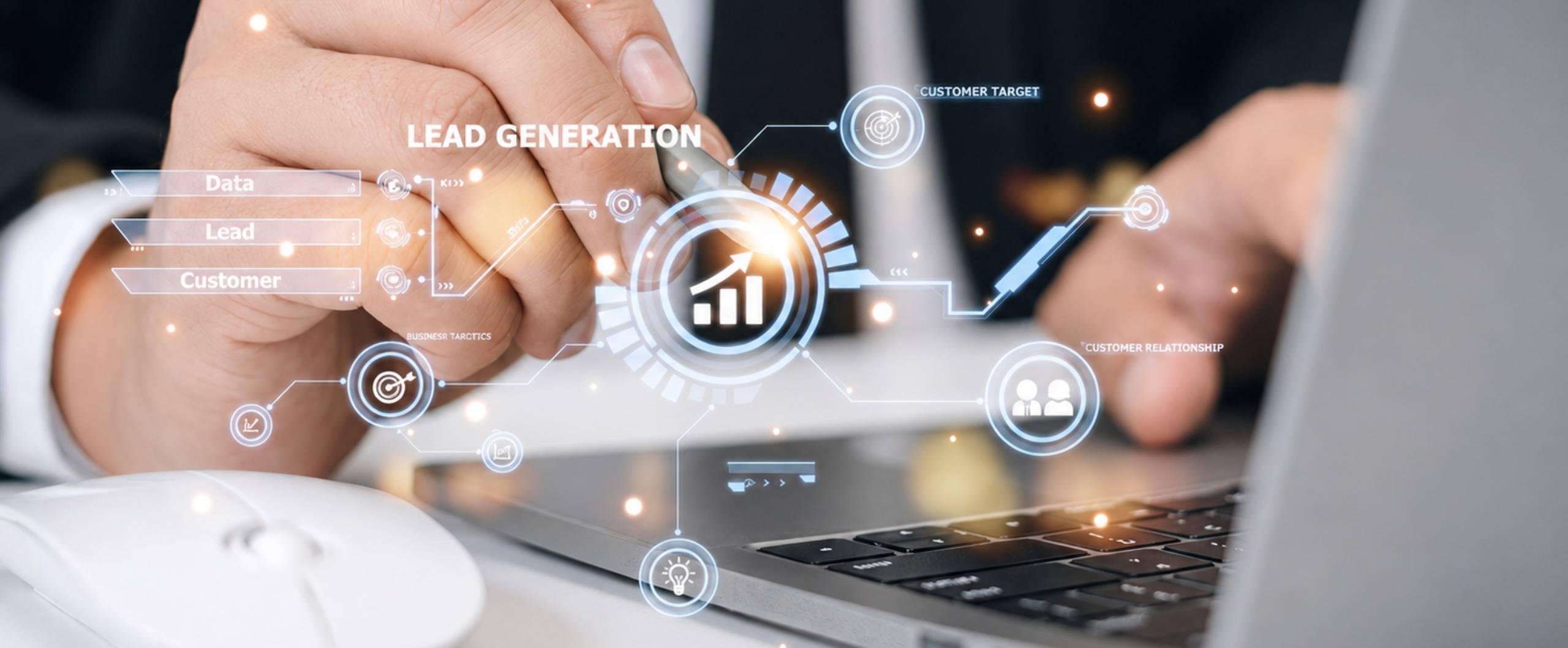
Here’s the truth most agencies won’t tell you: the average B2B website converts only about 2–3% of its visitors into leads. That’s not my opinion – Ruler Analytics’ benchmark study of 100+ million data points (ruleranalytics.com/blog/insight/conversion-rate-by-industry) puts the median at 2.9%, and Forrester pegs the cross-industry average at 2–4%. Do the math: roughly 95 to 97 out of every 100 people who land on your site leave without filling out a single form.
Most companies treat that as normal. I treat it as the single biggest money leak in their marketing. It’s not a traffic problem – it’s a tracking and conversion problem. And in 2026, the businesses pulling ahead in lead generation aren’t the ones spending more on traffic. They’re the ones finally acting on the traffic they already pay for.
Here’s the playbook.
The Tactics That Actually Move the Needle in 2026
Every tactic below exists to close the same gap: the distance between “they visited” and “we know who they are and what they want.”
Identify the visitors you’re already paying for. Visitor identification technology shows you which companies are on your site even when they don’t convert. You bought that traffic. Start acting on it instead of letting your best prospects walk out the door anonymously.
Reach out based on behavior, not guesswork. When you know a company has read your pricing page three times this week, you have a reason to reach out – and a message that lands. That’s intent-based outreach, and it converts far better than cold spray-and-pray.
Build retargeting on first-party data. Cookies are dying. Retargeting built on data you actually own survives the platform changes – and follows up across the channels your buyers actually live on.
Stop gatekeeping everything. Locking your best content behind a form kills its reach. Give it away, identify who’s consuming it, and follow up with the companies that engage.
Score your leads so your team works the right accounts. Don’t let your salespeople burn hours on tire-kickers. Score by intent, and put your best people on the hottest accounts.
Stack these together and you convert traffic you’re already paying for. But understand the catch: none of it works without tracking discipline behind it. Tactics without measurement is just spending money with extra steps.
Which Channel Generates the Most Leads? Wrong Question.
I get asked every week: “What’s the ONE channel we should double down on?” Anyone selling you a single magic channel is selling you something.
What works in 2026 is an integrated system where each channel does a specific job:
- Visitor identification as the foundation – capture the demand that’s already showing up
- LinkedIn for organic authority, plus paid follow-up to your warm audience
- SEO and AI-search visibility (GEO) so you get found long after the ad budget stops
- Segmented email – the right message to the right list, not one blast to everyone
- Google Ads for high-intent searches, where the buyer is already raising their hand
- Account-based marketing aimed at the handful of accounts that actually move your revenue
- Educational webinars and content that teach first and sell second
The mistake I see a LOT: business owners chase the channel, not the strategy. Pick channels based on where your buyers make decisions and how they buy – then connect them so a lead never falls through a crack between two of them. Channels are tactics. Strategy is what makes them pay.
The Tools Question: What Belongs in a 2026 Lead Gen Stack?
Tools don’t generate leads. Strategy does. A tool just makes a good strategy faster – and makes a bad one fail faster, too.
That said, the stack that earns its keep in 2026 does four things:
- Identifies the companies on your site
- Tracks intent – what they looked at, how often, how recently
- Automates the follow-up so no warm lead sits overnight
- Ties every lead back to spend so you know what’s working down to the dollar
For the AI and automation layer, I point clients to OneTouch.media – the AI platform we built to handle intent, automated follow-up, and the busy work that used to eat your team’s day. Around that, you want visitor-identification technology, a CRM your team will actually use, and analytics that connect every lead to the dollar that produced it.
The combination that wins: first-party intent data feeding automation, feeding a sales team that knows exactly who to call. Buy tools to support that system. Don’t buy tools and hope a system appears.
“Is Visitor Identification Even Legal?” Yes – Here’s What to Check.
Done right, website visitor identification is both safe and compliant. The reputable platforms identify businesses, not individuals; they work without third-party cookies; and they’re built on legitimate first-party data.
Before you turn anything on, confirm three things: the tool operates on business-level data, it runs cookieless, and the vendor holds real security certifications (look for ISO 27001) with data hosted appropriately for your market. If a vendor is fuzzy on any of that, walk away – your brand reputation is worth more than any lead.
But let’s be clear about where the real problem sits. Compliance isn’t the obstacle. The obstacle is that most companies aren’t using this data at all – and their best prospects are leaving anonymously every single day.
The Bottom Line
Lead generation in 2026 comes down to one shift: stop treating the 95%+ who don’t convert as lost, and start treating them as the warmest audience you have. Identify them, follow up with intent, score them, and route your team to the right accounts – all with tracking discipline underneath so every dollar reports back.
If you don’t know where your funnel is leaking, that’s the place to start.
Frequently Asked Questions
Want to see exactly where your funnel is leaking? Book a strategy call at jrcmo.com/work-with-a-fractional-cmo or call 214.466.8332.

Los Angeles Build Expo 2026
📅 November 4–5, 2026
📍 Los Angeles Convention Center - South Hall G · Los Angeles, CA
Reserve My Seat View ConferenceFree · In-person · Limited seats